
At Hometown Roofing & Construction, we’ve seen firsthand what Ohio’s storm seasons can do to a roof that wasn’t ready for them. We serve homeowners across Northeast Ohio — from Akron and Canton to Cleveland, Hudson, and beyond — and year after year, the same truth holds: the homeowners who come out of storm season in the best shape are the ones who prepared before the first storm arrived. As a Proof Residential Roofing Service partner, we’re proud to offer a proactive path to storm readiness that goes well beyond a one-time repair.
Proof is a residential roofing service that helps single-family homeowners protect their biggest investment by combining expert roof installation with ongoing annual care, all under one program. For homeowners in Northeast Ohio, Hometown Roofing is your local Proof partner — the team handling your installation, your annual checkups, and your peace of mind.
This guide is designed to help you understand how Ohio storms affect roofs, what to look for before storm season begins, and how to stay ahead of problems that could cost you far more down the line.
What Types of Storms Most Commonly Damage Roofs in Ohio?
Ohio throws a lot at homeowners. Spring and early summer bring severe thunderstorms capable of producing large hail and wind gusts that exceed 60 to 70 miles per hour. Late fall and winter bring ice storms, heavy snow loads, and freeze-thaw cycles that stress materials and expose vulnerabilities in flashing and sealants. Hail damage to roofs in Ohio is one of the most frequent drivers of insurance claims in the state. Hailstones can crack shingles, dent flashing, and strip away the granules that protect the material underneath. Understanding which storm types pose the greatest risk helps you know what to look for and how urgently to act.
How Do I Know If My Roof Can Withstand High Winds?
A roof’s ability to withstand high winds depends on two factors: the quality of the original installation and the current condition of the materials. Shingles that are properly fastened and sealed resist wind uplift far better than those that have loosened over time. Flashing around chimneys, vents, and roof edges is especially vulnerable; if it’s starting to pull away or corrode, wind-driven rain can enter quickly and quietly.
Check Shingle Adhesion and Surface Condition
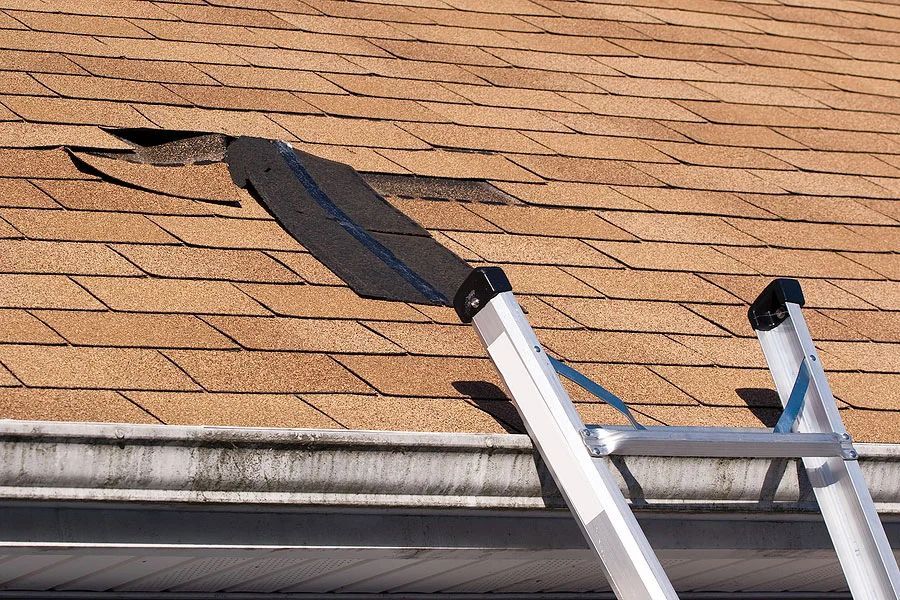
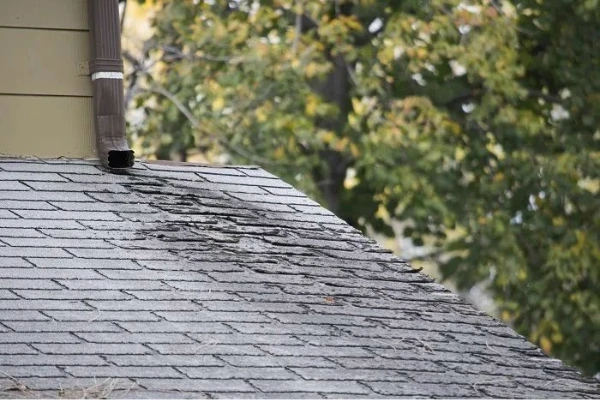
To do this, you can walk the perimeter of your home and look for shingles that are curling at the edges, cracking, blistering, or missing altogether. These are signs that the adhesive seal has weakened and the shingle may not hold under wind stress. Granule loss, often visible as a gritty buildup in your gutters, points to aging material that has lost a significant layer of its protective coating.
Inspect Flashing and Ridge Caps
Where your roof connects to vertical surfaces like walls, chimneys, and vent pipes, flashing acts as a critical barrier that keeps water from working its way into the joints. If it’s buckled, rusted, or separating, it creates an entry point for both wind and water. Ridge caps (the shingles that run along the peak of your roof) take the most direct wind exposure on the entire structure and should lie flat with no visible lifting or separation.
What Should Be Inspected On My Roof Before Storm Season?
Storm season readiness requires knowing your roof’s vulnerable areas and warning signs to watch for as weather approaches. A thorough pre-storm roof inspection in Ohio covers both visible surface materials and the structural elements beneath. A preliminary check can be done from the ground with binoculars, but you should have a professional complete a safe and accurate assessment. With Proof care, you won’t ever need to think about it. We’ll automatically be there before the storms hit.
Material Checkup: Focus on the Surface
The material checkup is about what’s visible and how the exterior components are performing. Look at your shingles for cracking, blistering, or missing sections. Have the flashing checked around any roof penetrations — vents, satellite dishes, antennas — to confirm that seals are still intact and tight. Ridges and curbs should lie flat without any lifting. Loose debris on the roof surface, such as leaves and branches, should be cleared before storm season, as trapped moisture accelerates wear on shingles and flashing over time.
Structural Checkup: What’s Happening Underneath
A roof can look fine from the curb while still having structural issues below the surface. Our inspector will look for uneven roof planes or sections that appear to sag. These can signal problems with the decking or the structural supports beneath. Your attic venting system plays a direct role in moisture control and temperature regulation; blocked or compromised vents can speed up deterioration from the inside. Fascia and soffit (the trim elements along the lower edge of the roof) should be examined for rot, warping, or pest damage that could undermine the integrity of the roof system.
Gutters, Trees, and Debris Buildup
Gutters clogged with debris prevent proper water drainage during heavy rain, which leads to water backing up at the roofline. Overhanging tree branches are one of the most underestimated storm hazards. A single limb during a strong wind event can puncture roofing material or tear off shingles. A walk of your property will reveal any branches hanging within striking distance of your roof before storm season arrives.
How Often Should I Have My Roof Professionally Inspected in Ohio?
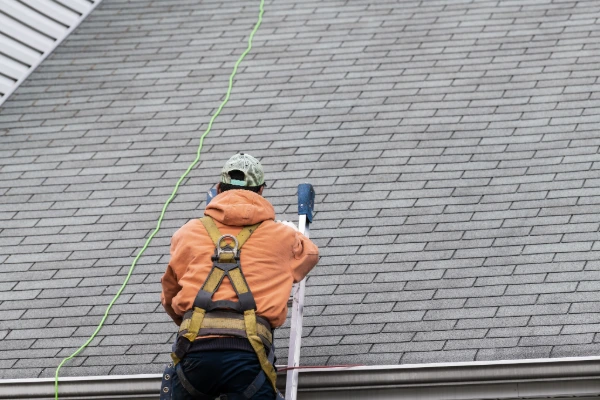
Most roofing professionals recommend at least one professional inspection per year, with spring being the ideal time to catch issues before they’re tested by the severe weather that follows. Homes that are 10 or more years old, or those that have recently experienced a major storm, should be inspected promptly, even when no obvious damage is visible from the ground. Small problems often grow quietly, and by the time water stains appear on your ceiling, the damage behind the scenes is usually much worse than it looks.
Professional inspections may be conducted from the ground, by climbing onto the roof, or through on-site drone operations, depending on the roof’s slope and condition. Each approach gives the inspector a different perspective and helps make sure nothing goes undetected. Consistent annual inspections also build a documented history of your roof’s condition over time — documentation that carries real weight when you need to file an insurance claim after a storm.
Does Homeowners Insurance Cover Storm Damage to My Roof in Ohio?
In most cases, yes. Homeowner’s insurance policies cover sudden, accidental damage from events like hail, wind, and falling debris. There’s an important distinction homeowners should understand: insurance is designed to cover storm damage, not a roof that was already deteriorating. An adjuster who finds signs of poor maintenance before the storm may reduce or reject your claim.
This is where a record of regular roof care works directly in your favor. Homeowners who can produce annual care reports showing that their roof was maintained and in good condition before the storm give the adjuster a clear basis for attributing damage to the storm itself. A new roof may also help unlock insurance savings, with many carriers offering discounts between 5% and 20% for qualifying roofs; savings that can grow considerably over the life of a policy.
The Proof Annual Care Plan: Storm Readiness Built In
Reacting to damage after a storm has already hit is expensive and stressful. The better approach is to stay ahead of problems before they have the chance to grow. That’s the purpose behind the Proof Annual Care Plan, offered through Hometown Roofing & Construction as part of our partnership with Proof Residential Roofing Service.
The plan includes a full material checkup of shingles, flashing, ridges, and curbs, and a structural checkup of roof planes, pitch points, venting systems, fascia, and soffit. It also covers gutters, surrounding trees, and debris-prone areas. Inspections are conducted from the ground, rooftop, or with a drone, depending on your specific needs.
Beyond the inspection itself, the Proof Annual Care Plan keeps detailed records that help you get the most from your homeowner’s insurance policy, contractor workmanship guarantee, and manufacturer’s warranty. When a storm does hit, you have the documentation to back up your claim. For homeowners in Northeast Ohio who want to stop worrying about their roof and start feeling confident in it, this plan is the foundation of a proactive strategy.
Protect Your Home Before the Next Storm Hits
Ohio’s storm season will come whether you’re ready or not. A professional inspection now can catch small issues before they become large, expensive problems, and give you the peace of mind that comes from knowing your home is prepared.
Hometown Roofing & Construction serves homeowners across Akron, Canton, Cleveland, Green, Hudson, Medina, Massillon, North Canton, Solon, and the surrounding Northeast Ohio communities. Every roof Hometown Roofing installs uses materials sourced from proven manufacturers like Owens Corning, and financing is available through Improvifi for qualified homeowners — so getting the roof your home needs doesn’t have to mean a high upfront cost.
Contact Hometown Roofing & Construction today to schedule your pre-storm roof inspection or request a free estimate. We’re available around the clock to help protect your home, your family, and your investment.